
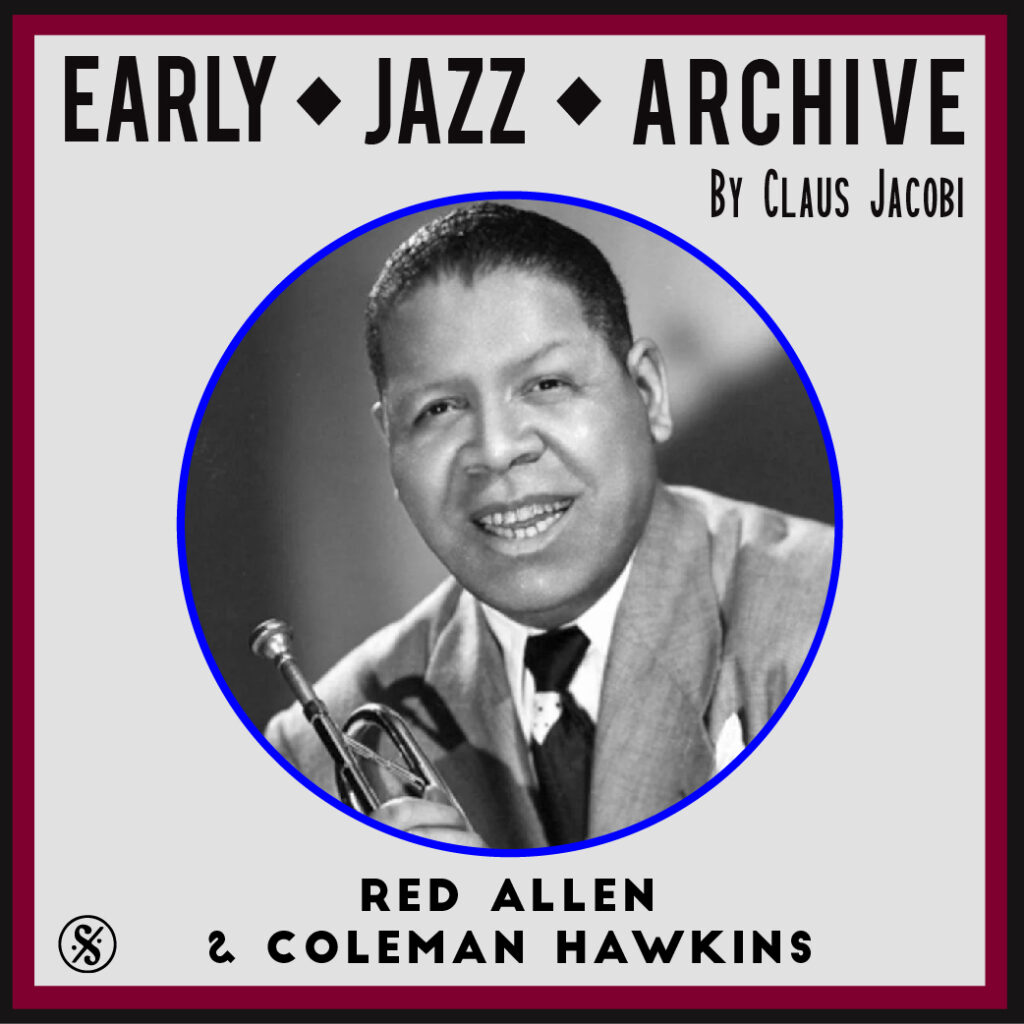
Henry “Red” Allen & Coleman Hawkins
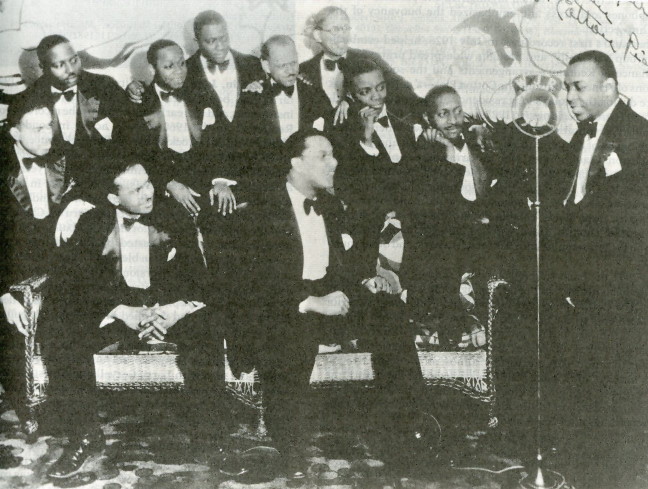
Few partnerships in early jazz captured the creative tension between raw New Orleans fire and emerging swing sophistication as vividly as the collaborations between trumpeter Henry “Red” Allen and tenor saxophonist Coleman Hawkins. Though neither was a permanent sideman in the other’s orchestra, their frequent encounters in studio groups and mixed orchestras during the late 1920s and early 1930s produced some of the most exciting small-to-medium ensemble recordings of the period.
Henry “Red” Allen (1908–1967), born in New Orleans and raised in a deeply musical family, was one of the most daring trumpeters of his generation. His style bridged traditional New Orleans phrasing and a forward-leaning harmonic imagination that often anticipated bebop. Allen’s playing was vocal, unpredictable, and emotionally charged, sometimes described as almost “reckless”. As a bandleader and featured soloist, he surrounded himself with strong personalities and encouraged expressive freedom rather than polished uniformity.
Coleman Hawkins (1904–1969), by contrast, was the architect of the modern tenor saxophone. Hailing the Midwest and later raised in Chicago, Hawkins is best known for establishing the instrument as a serious solo voice in jazz. Hawkins brought harmonic authority, paired with advanced technique and a commanding tone that cut through in most settings. By the early 1930s, he was already widely respected as a musician, equally at home in hot jazz settings and more arranged orchestral contexts.
Allen and Hawkins often appeared together in studio orchestras under shared billing. Allen’s explosive trumpet lines pushed against Hawkins’ grounded, harmonically rich tenor, creating a dynamic contrast that animates some of the arrangements featured on this page. Titles such as Ain’t Cha Got Music?, Shadows on the Swanee, and Stringing Along on a Shoestring showcase this dialogue beautifully: tightly written ensemble passages give way to solos that feel conversational and alive.
These recordings sit at a pivotal moment in jazz history, when big-band writing was becoming more sophisticated but still left ample room for individual voices to assert themselves. The arrangements presented here preserve that balance, structured yet flexible. They offer invaluable insight for musicians interested in early swing phrasing and orchestration. They also include some solo transcriptions for those interested in the original interpretations.
These transcriptions are available to download for free for the website members. We appreciate a donation if you can afford it. Thank you!
The arrangement charts will appear below once you’re logged in.
👇